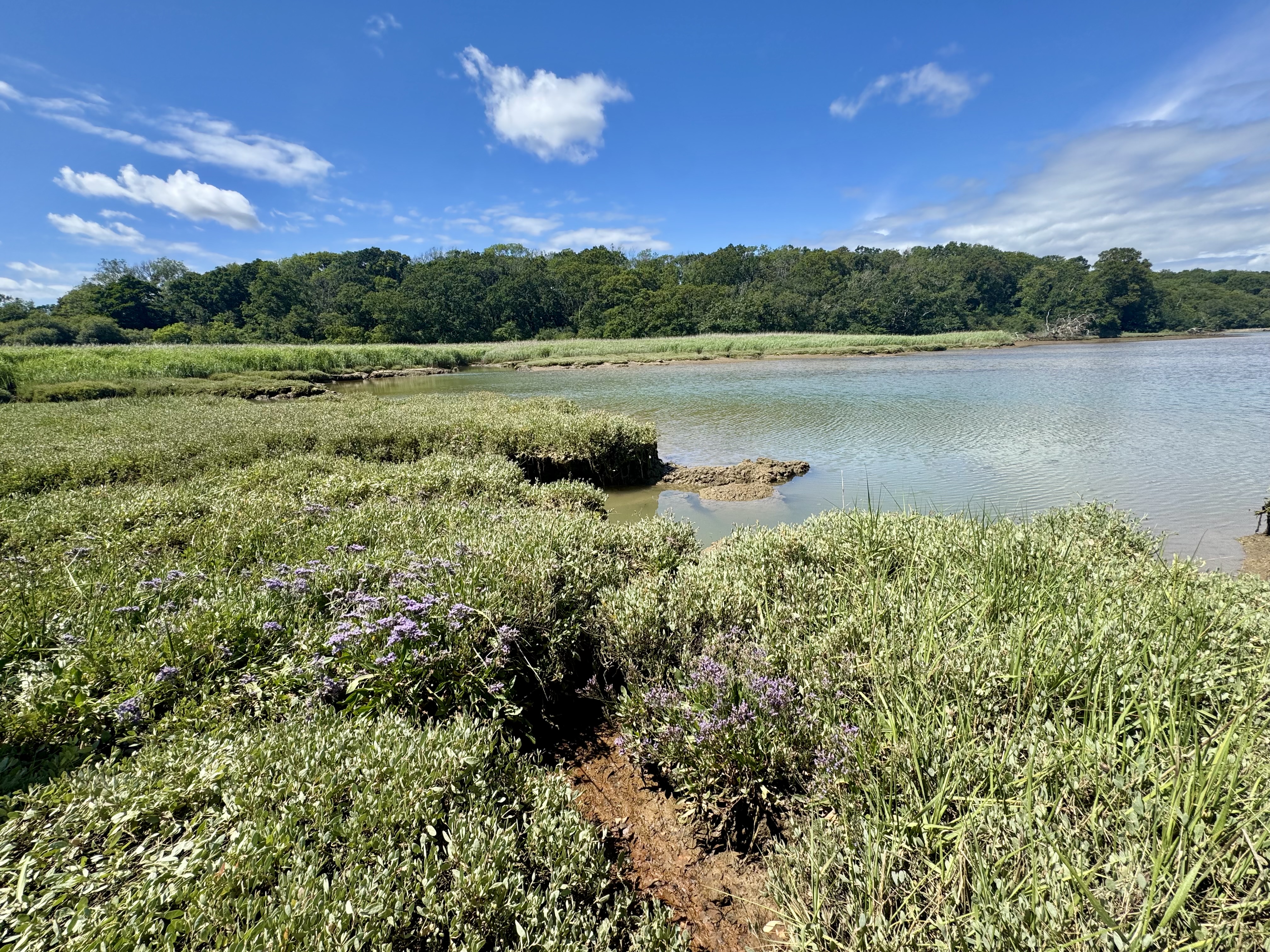
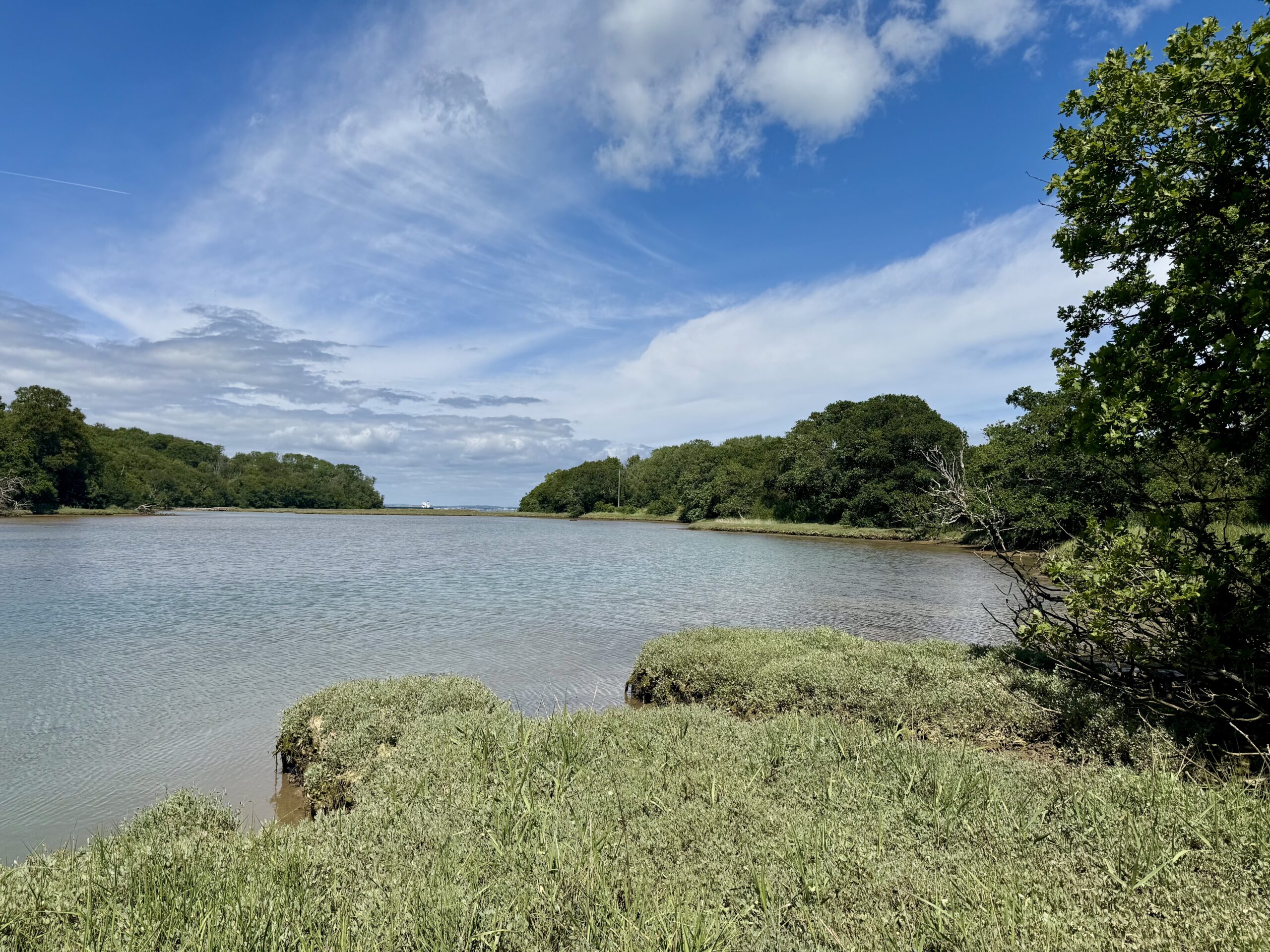
Palmers Brook is unique in that it’s one of the very few undeveloped estuarian habitats on the Isle of Wight. Spanning ancient woodlands, reedbeds, salt marshes and mudflats, the site supports an array of wildlife, from migratory birds to early purple orchids.
The land is therefore highly protected and has high ecological value and biodiversity potential attracting wading birds and marine life into this unique landscape.
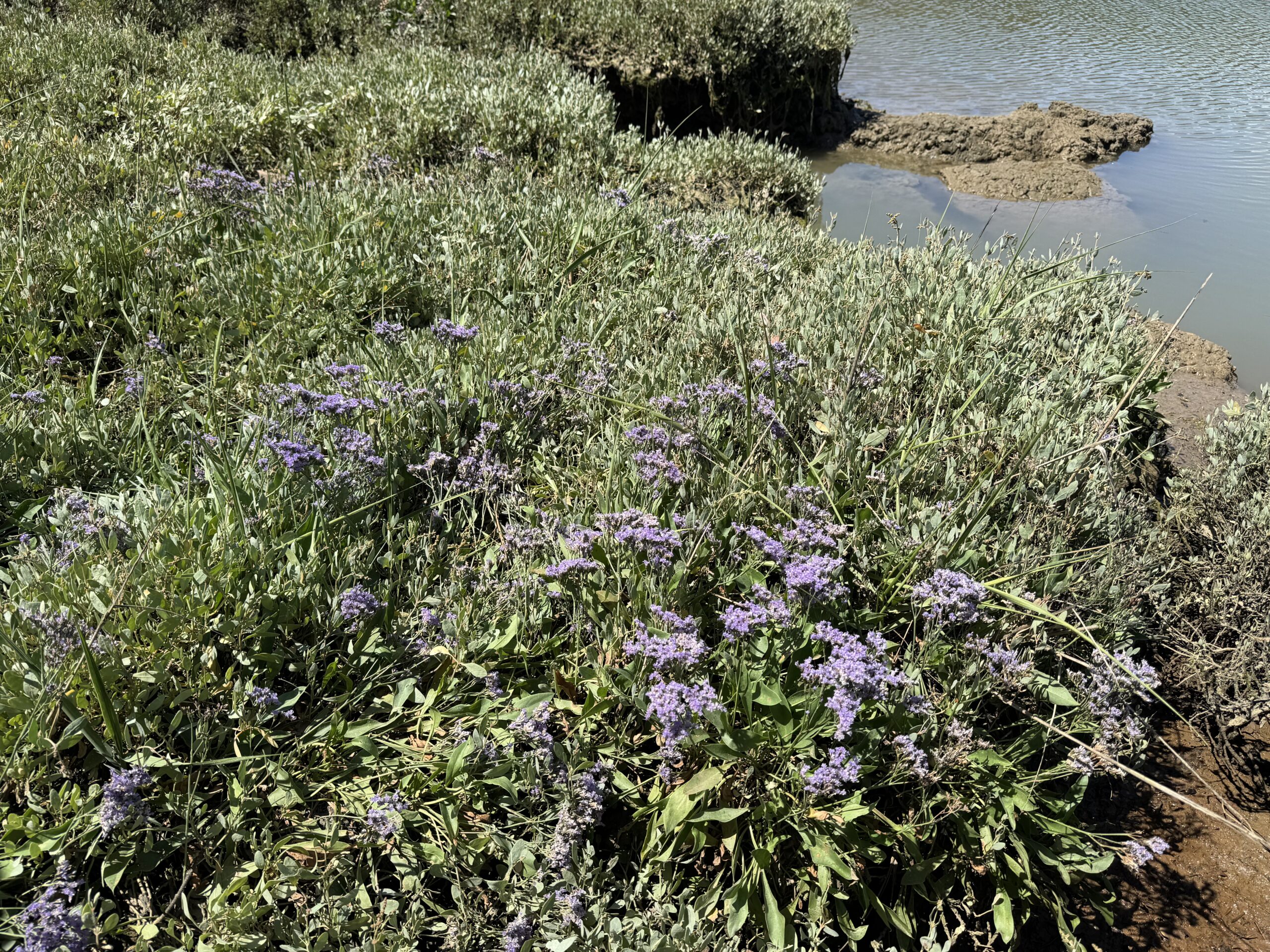
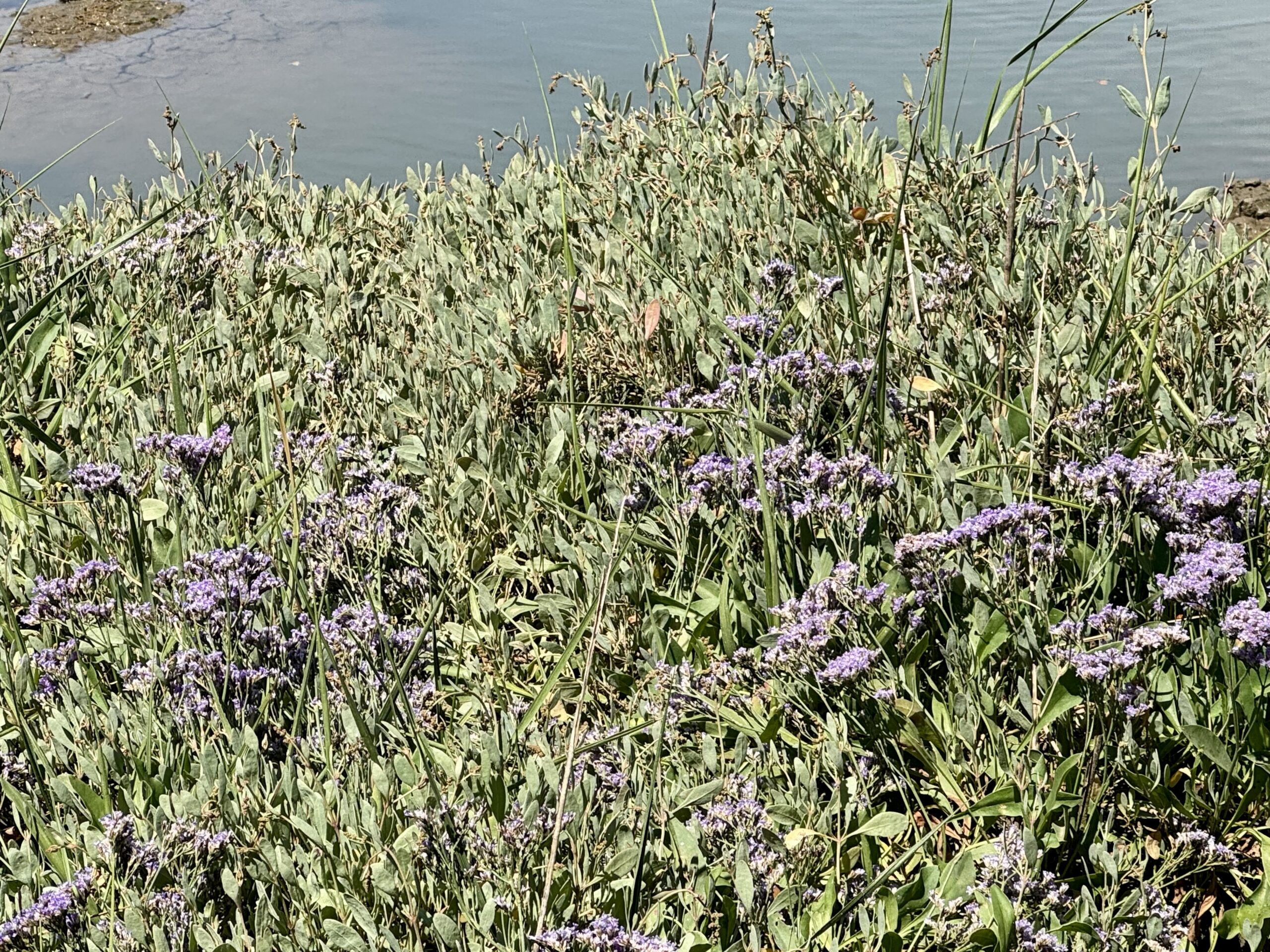
At this time of year, there is an abundance of sea-lavender which plays an important role in coastal habitat restoration. These delicate purple flowers, native to salt marshes, are essential engineers of coastal resilience.
Sea-lavender’s dense root systems stabilize mudflats and salt marshes, preventing soil erosion that threatens coastal communities. Not only that, but sea-lavender also provides crucial habitat and food sources for migratory birds, insects, and fish species that depend on healthy marshes.
Salt marshes containing sea-lavender also capture significant amounts of carbon and are a natural solution to the climate crisis. Carbon is captured by plants such as sea-lavender in the saltmarsh through photosynthesis and is stored both in the plant and the sediment beneath, which can extend several metres deep.
Not only is it beautiful to look at, but the presence of sea-lavender at Palmers Brook is vital as it naturally filters pollutants and excess nutrients, improving water quality in the estuary and coastal waters.

 © JTCT
 © JTCT
 © JTCT