Palmers Brook Nature Reserve is a remarkable mosaic of habitats, including ancient woodland, reedbeds, saltmarsh, mudflats and wildflower-rich meadows. The meadows areas form an important part of the wider vision to restore and enhance biodiversity across the site.
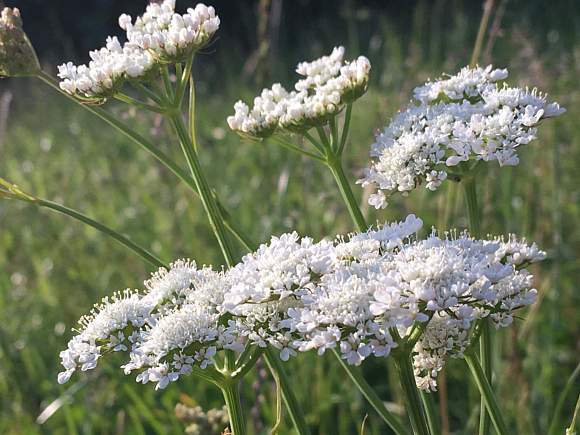
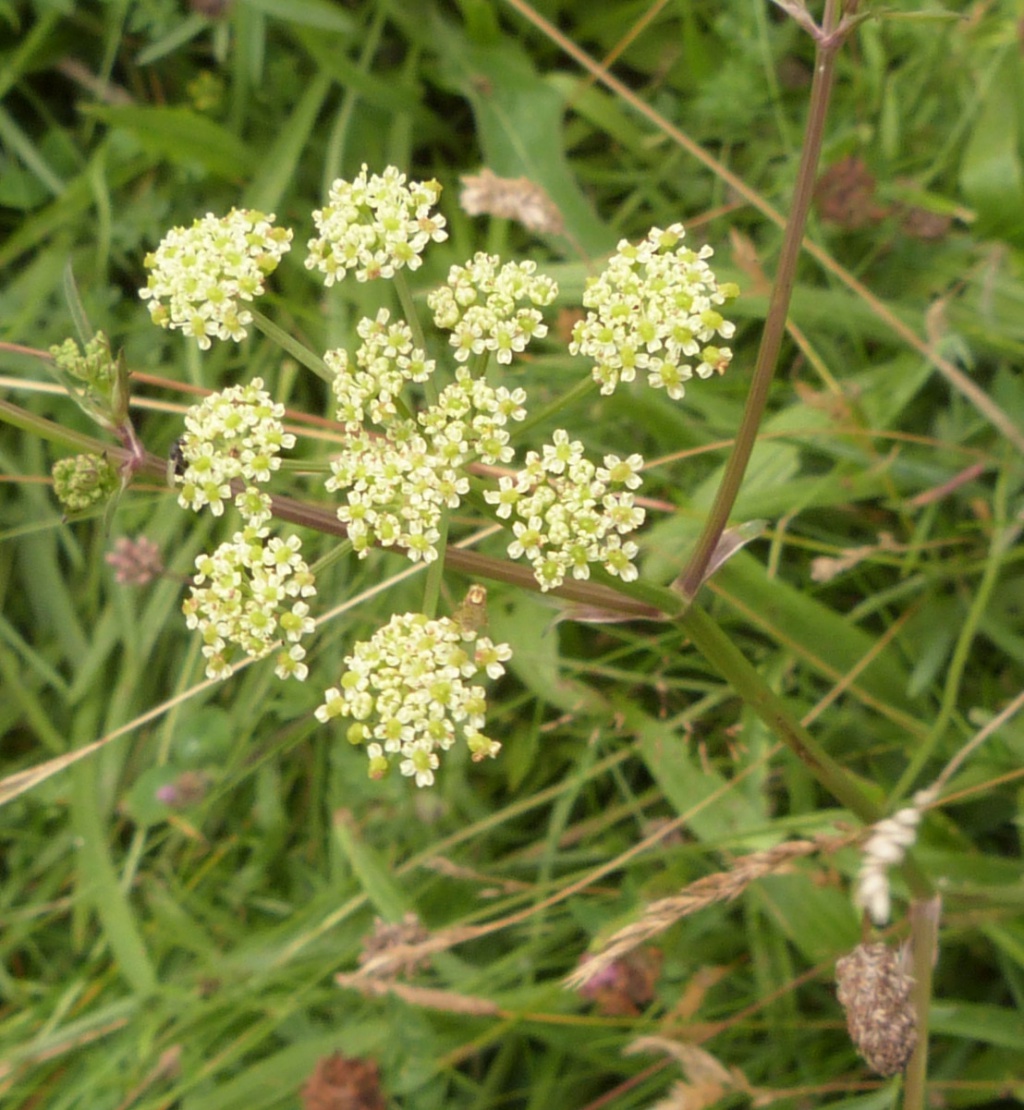
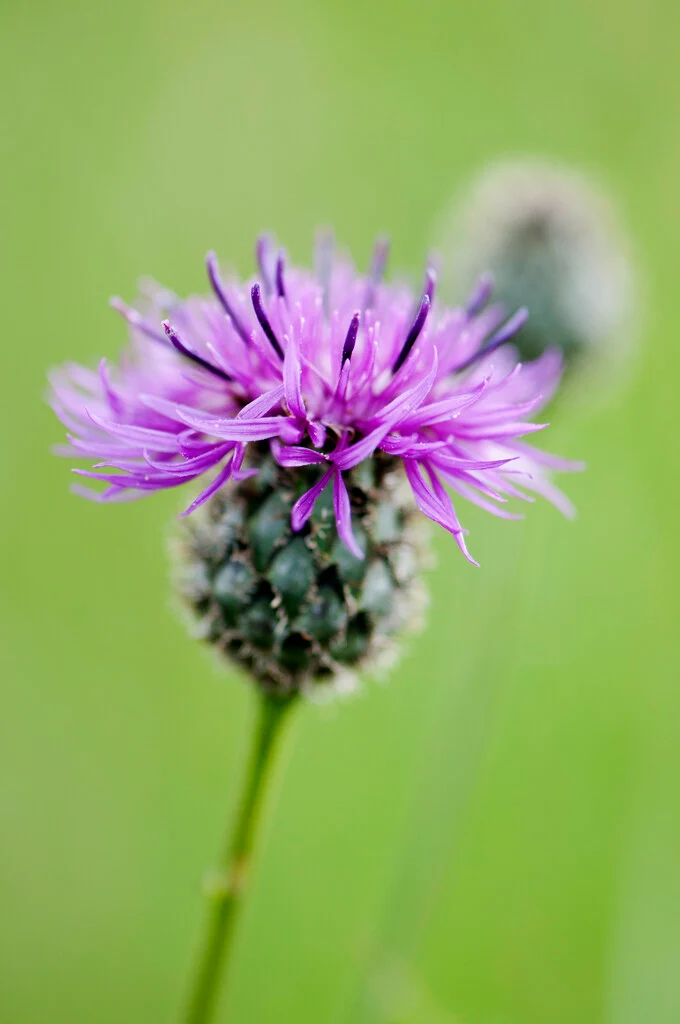
Notable finds are common knapweed, corky-fruited water-dropwort and pepper saxifrage which provide an intriguing glimpse of the botanical richness at Palmers Brook.
Common knapweed is one of the most recognisable plants of Britain’s traditional meadows. Its sturdy stems carry distinctive purple flower heads, giving grasslands splashes of colour through the summer. It typically flowers from June into September and occurs widely across Britain’s meadows and other grassland habitats.
Common knapweed is more than simply an attractive wildflower. Its nectar-rich flowers are valuable to insects, including bees, butterflies and beetles, while the seeds can provide food for birds. In a diverse meadow, plants such as knapweed help create the structure and food resources needed to support a much wider community of wildlife.
Much less familiar to many people is corky-fruited water-dropwort (Oenanthe pimpinelloides), a native perennial found particularly in southern England. It has finely divided, fern-like foliage and upright, hollow, grooved stems that can reach around a metre in height. During the summer, there is an abundance of this delicate small white flower at Palmers which is arranged in umbrella-like clusters.
Despite its name, corky-fruited water-dropwort is not restricted to wetland habitats and its presence is often associated with ancient landscapes. It can occur in old, unimproved grassland including dry or damp meadows, and favours sunny locations and relatively low-fertility soils.
Another particularly interesting species found at Palmers Brook is Pepper Saxifrage (Silaum silaus). It is actually a member of the carrot family and produces delicate, branching heads of creamy-yellow flowers between June and September.
Pepper saxifrage is almost always associated with ancient habitat with unimproved grassland, traditional hay meadows and generally damper soils. Its presence at Palmers is a sign that the grassland is ancient and of ecological and conservation significance.
A meadow worth protecting
These three plants illustrate how much botanical interest can be hidden within a lowland meadow. Common knapweed brings bold colour and valuable nectar, corky-fruited water-dropwort contributes a distinctive and locally interesting umbellifer, while pepper saxifrage is a sign of meadow quality.
Maintaining this diversity requires careful management which will include traditional approaches such as appropriate grazing and hay-cutting which can help prevent vigorous grasses and scrub from overwhelming meadow plants, while allowing flowering and seed-setting to take place.