
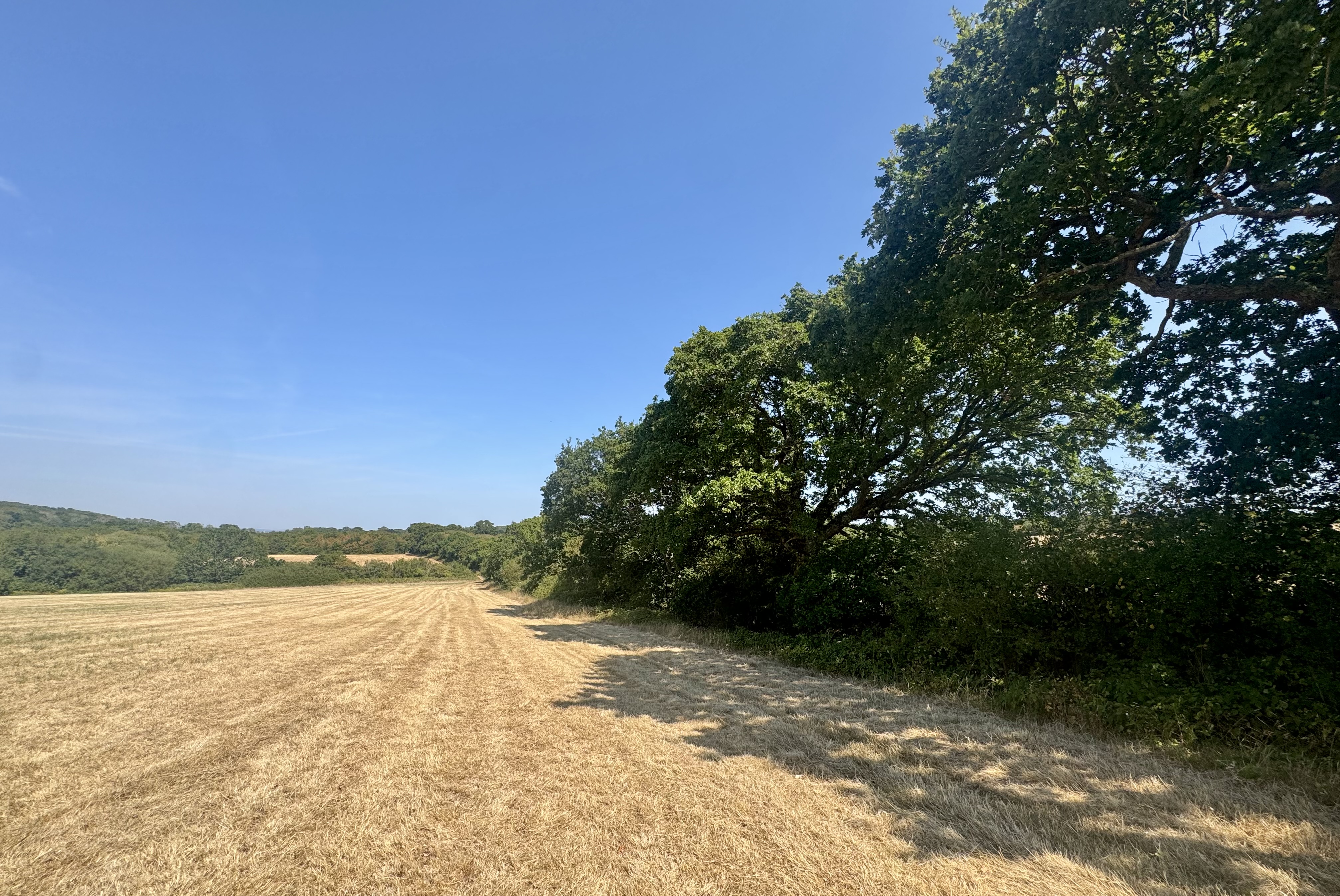
The James Tuttiett Charitable Trust is working in partnership with the Hampshire & Isle of Wight Wildlife Trust (HIWWT) to build a detailed understanding of the wildlife and habitats at Palmers Brook Nature Reserve. Since the JTCT acquired Palmers Brook the Trust has embarked on a programme of ecological monitoring and specialist surveys to help establish a baseline picture of the reserve’s flora, vegetation, and habitats.
The work includes the involvement of Dr Mark Spencer, a forensic botanist, whose botanical expertise is helping to identify and record plant species and other indicators of the site’s ecological history. On one of the hottest days in August, we were lucky enough to join Mark on site where he explained his findings. His knowledge and enthusiasm for his subject is infectious and he really brings to life the significance of this remarkable landscape.
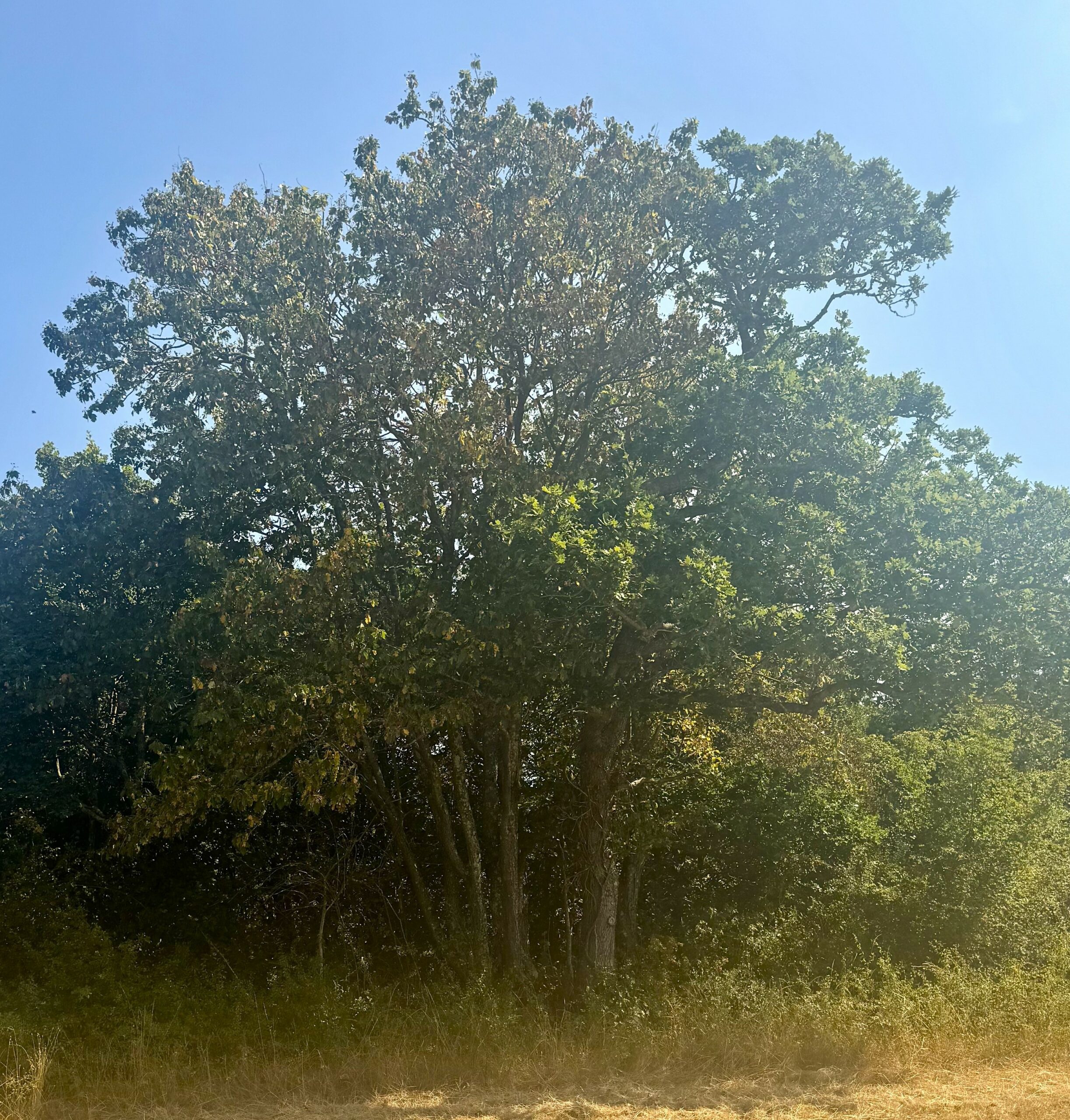
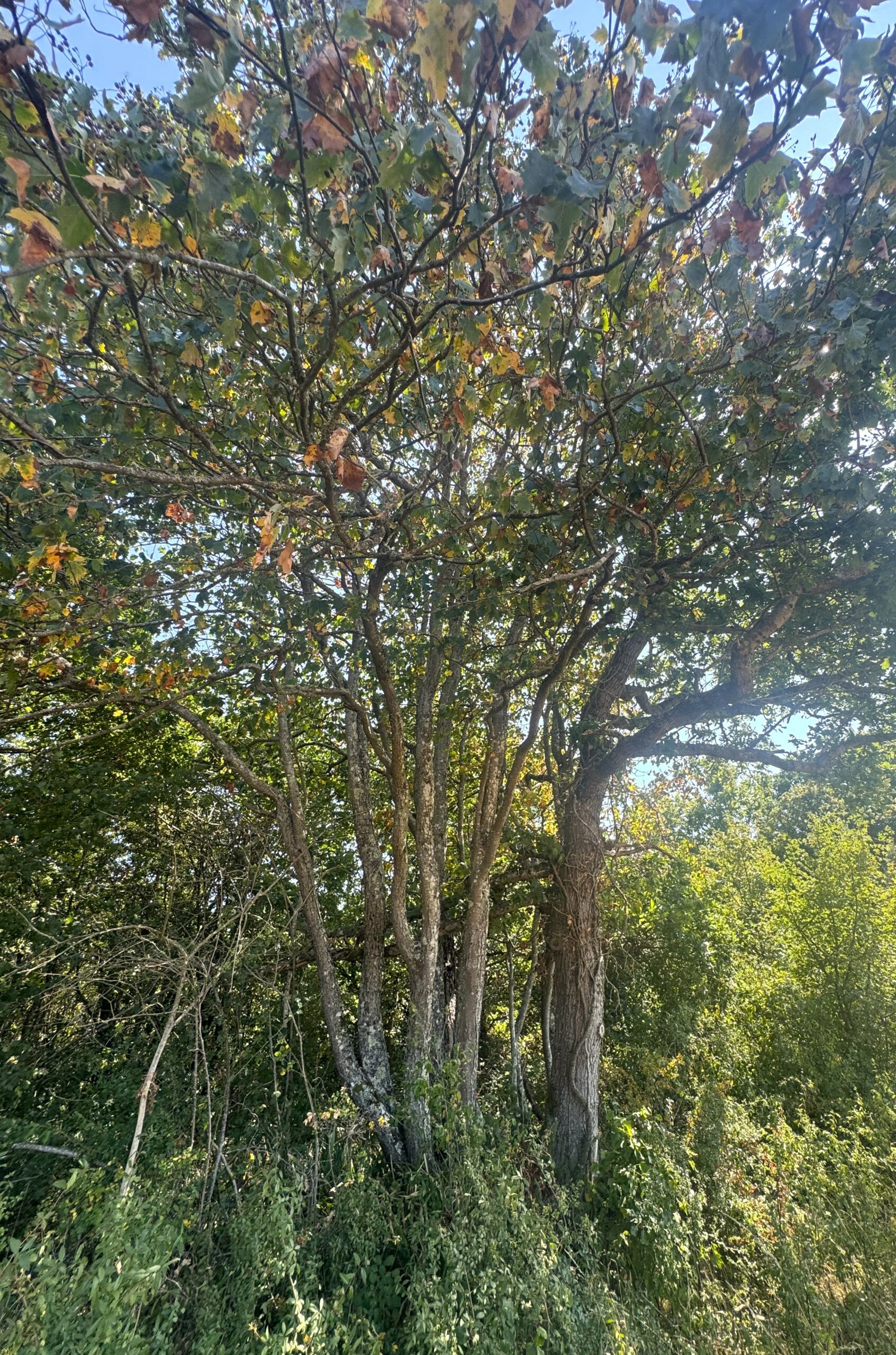
This visit focused on the important veteran trees in particular the presence of wild Service Trees ( Sorbus torminalis)) which run along the Motkin Boundary. These trees are highly likely to be native remnants of a formerly more widespread population. There is also a small remnant fragment in Blanket Copse which run along the northern edge of Brocks Copse Road. The presence of these trees is significant as they are an indication of ancient woodland.
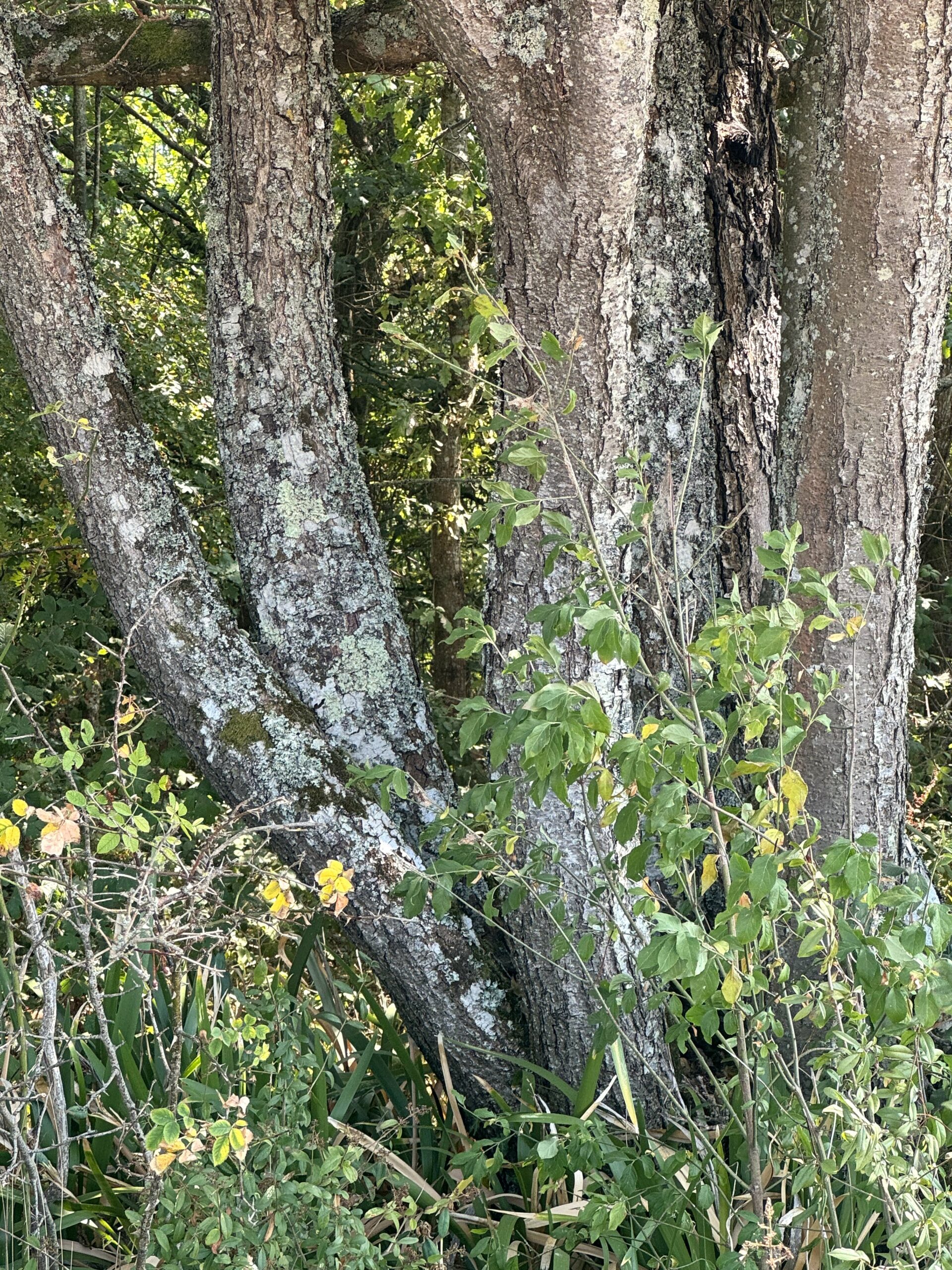
The leaves have five to seven sharp points and are shaped much like maple leaves which turn a brilliant copper red in autumn. The bark is different to an oak with its distinctive dark brown patterned with cracked, square plates and the twigs are slender, shiny and grey, brown in colour. The hedge boundaries along the Motkin ditch also contains a number of ancient woodland indicators species including Butchers Broom.
The wild service tree is hermaphrodite meaning both male and female reproductive parts are contained within each flower. The flowers form in clusters in late spring and are pollinated by insects. Once pollinated the flowers develop into green-brown oval fruits which are often referred to as ‘chequers’ which in mythology were said to taste like dates. They thrive best in clay and lime base soils the flowers provide pollen and nectar for insects while the berries provide food and shelter for birds.
Part of our management plan will be to ensure that these magnificent trees are protected and a margin either side of the Motkin boundary is maintained to ensure there is no encroachment.
 © JTCT
 © JTCT
 © JTCT